Travel Trends 2026: What's Next for Smart Travelers (Complete Guide)
Travel is entering a new phase. In 2026 travelers are expected to look beyond basic flight deals and hotel discounts and focus more on ease flexibility personalization and meaning. People still want good prices, but they also want trips that feel smoother to plan, less stressful to manage, and more rewarding once they arrive.
The next generation of travel is not only about technology, although technology will play a major role. It is also about intention. Travelers are becoming more selective about where they go, how they move, how much time they spend, and what kind of experience they want to have. Convenience and purpose are no longer separate ideas. In many ways they now define the same journey.
From AI itinerary planning to slower travel, from biometric airport systems to more responsible destination choices, the most important travel trends of 2026 all point in one direction. Travelers want journeys that save time, reduce friction, and feel more aligned with their values.
AI Will Make Travel Planning Faster and Smarter
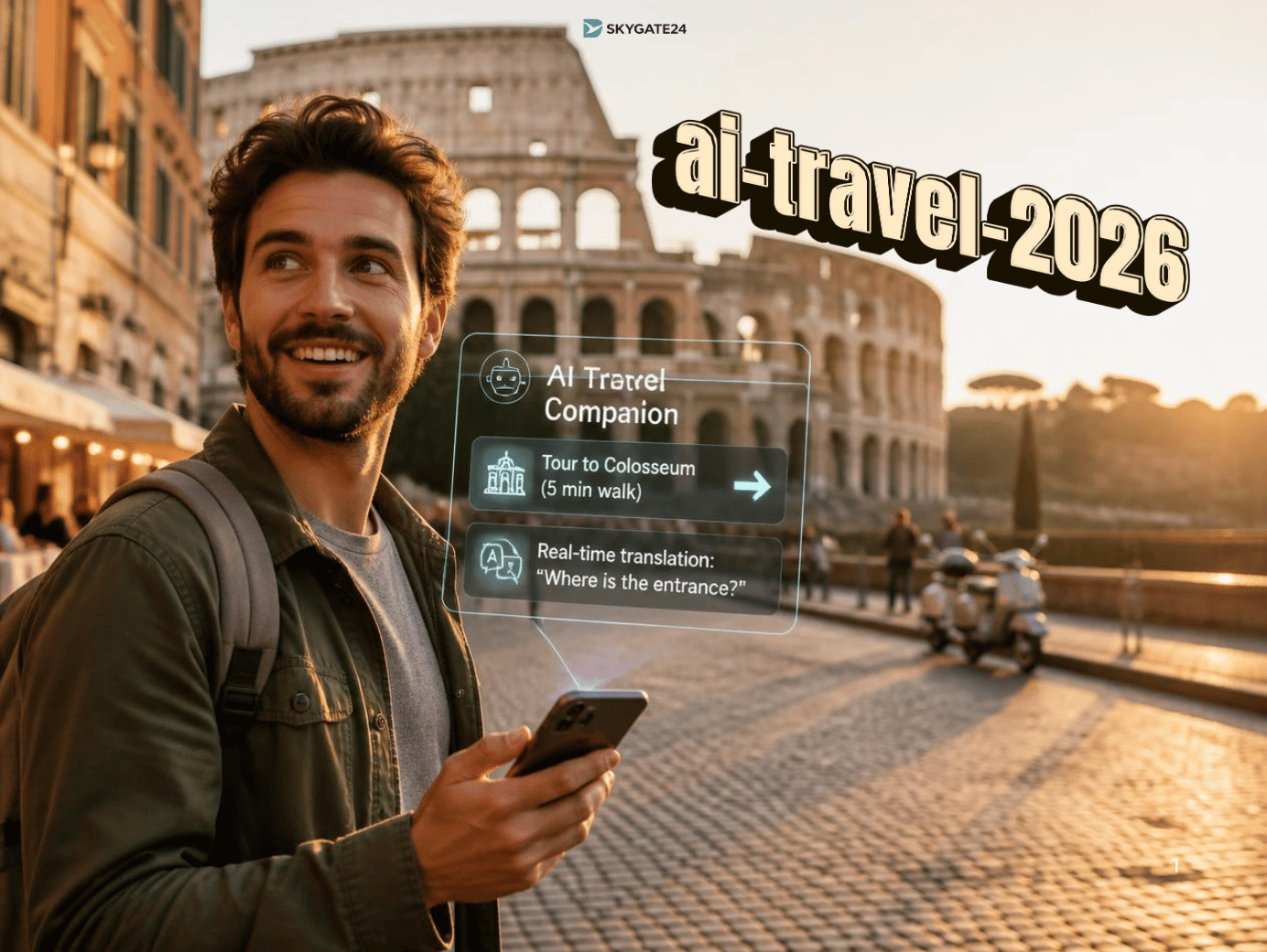
Artificial intelligence is becoming one of the most practical travel tools for modern travelers. Instead of spending hours comparing flights, hotels, neighborhoods, and itineraries manually, more people are expected to use AI to simplify the process and narrow down better choices more quickly.
This shift is not really about replacing decision-making. It is about improving the starting point. A traveler can ask for a city break focused on local food, boutique hotels, and walkable neighborhoods, or a longer family vacation with a balance of culture, relaxation, and child-friendly attractions. AI can help organize these ideas into a clearer plan and reduce the amount of scattered research.
For travelers, the real value is speed and customization. Planning becomes less overwhelming and more focused. Instead of starting from zero, people begin with a useful structure they can refine according to budget, timing, and personal style.
Explore flights and hotels for your next trip with SKYGATE24

Airports Will Become More Frictionless
One of the clearest travel expectations for 2026 is a smoother airport experience. Travelers are increasingly frustrated by long lines, repeated document checks, and disconnected transit processes. That is why frictionless travel is becoming more important. The less time people spend dealing with unnecessary airport stress, the better the overall journey feels.
Biometric systems, digital identity tools, and more seamless airport checkpoints are likely to expand further. These innovations are designed to make movement through airports faster and more efficient. For travelers, this is not just about speed. It is also about reducing anxiety during some of the most stressful parts of a trip.
As airports become more digitally integrated, expectations will rise. People will increasingly prefer travel systems that feel smooth, organized, and easy to navigate from departure to arrival.

Regenerative Travel Will Become a Stronger Priority
For years the travel industry focused heavily on sustainability. In 2026 that conversation is expected to evolve even further. More travelers are beginning to ask not only how to reduce harm, but how their trip can create a positive impact.
This is where regenerative travel becomes more important. The idea is simple. Travel should support local communities, protect natural spaces, and contribute something meaningful instead of simply extracting value from a destination. This can include staying in locally conscious properties, supporting community-based experiences, and choosing places that manage tourism responsibly.
Travelers are also becoming more aware of the difference between genuine impact and empty marketing. That means transparency will matter more. The destinations and travel brands that can clearly show how tourism benefits local people and places are likely to earn stronger trust
Find more intentional travel ideas and destination inspiration on SKYGATE24.
Slow Travel and Wellness Escapes Will Keep Growing
Many travelers are tired of rushed itineraries and packed schedules. In response, slow travel is expected to remain one of the strongest trends of 2026. Instead of trying to visit as many places as possible in a short time, more people want deeper and calmer experiences in fewer destinations.
This shift connects closely with wellness travel. Rest, recovery, quiet, and balance are becoming more important travel goals. For some travelers this means booking longer stays in peaceful places. For others it means choosing hotels and retreats that prioritize privacy, better sleep, natural surroundings, and digital downtime.
Slow travel also appeals to people who want more meaningful local connection. When travelers stay longer and move more slowly, they often spend more thoughtfully and experience a destination in a more personal way.
Second-City Travel Will Offer Better Value and Better Experiences
Another major trend for 2026 is the continued rise of second-city travel. Instead of focusing only on the most famous and most crowded destinations, travelers are increasingly open to nearby alternatives that offer culture, atmosphere, and quality experiences with less pressure.
These secondary destinations often provide lower prices, fewer crowds, and a more relaxed pace. They can also offer a more local and authentic experience compared with heavily touristed capitals and resort zones. For many travelers, that balance is becoming more attractive than chasing the most obvious destination on social media.
This trend is especially important for travelers who want better value without sacrificing quality. It also helps reduce overtourism by spreading tourism more naturally across a wider range of places
Search hotels in emerging destinations with SKYGATE24.
Greener and More Flexible Transport Will Matter More
Transport decisions are becoming more thoughtful. In 2026 travelers are expected to pay closer attention not only to price and schedule but also to comfort, environmental impact, and convenience. On many regional routes, trains are becoming more appealing because they can offer a calmer and more direct experience than short-haul flights.
At the same time, greener aviation options and more integrated local transport systems are becoming part of the travel conversation. Travelers want easier last-mile connections, better transit planning after arrival, and more visibility into how they move from one stage of the trip to another.
The future of transport in travel is not just about speed. It is about the full experience of movement. A journey that feels coordinated and low stress can be just as valuable as saving time.

Multigenerational Travel Will Need Smarter Planning
Family travel is changing too. More trips now involve grandparents, parents, and children traveling together. This makes flexibility more important than ever. A successful multigenerational trip needs the right destination, the right accommodation, and a balanced pace that works for different ages and travel expectations.
Destinations that offer comfort, easy transportation, cultural depth, and optional downtime are especially well suited to this style of travel. Large families increasingly want trips that allow shared memories without constant exhaustion.
This trend also supports a more thoughtful way of planning. Instead of creating a schedule that is too full, successful group travel often depends on balance, privacy, and realistic expectations.
What These Travel Trends Really Mean
Taken together, the biggest travel trends of 2026 tell a clear story. Travelers want better journeys, not just bigger ones. They want planning tools that save time, airport systems that reduce stress, destinations that feel less crowded, and experiences that create more meaning.
Technology will continue to shape travel, but the human side of travel is becoming even more important. Rest, purpose, flexibility, local connection, and value are now central to what people want from a trip.
The future of travel is not simply faster or more digital. It is smarter, calmer, more intentional, and more personal.
Final Thoughts
The most important travel trends for 2026 are not only about new tools or new platforms. They are about changing expectations. Travelers want trips that are easier to plan, smoother to experience, and more rewarding once they arrive.
From AI-powered itineraries and frictionless airports to regenerative travel, slow tourism, second-city escapes, greener transport, and multigenerational travel, the message is clear. Travel is becoming more thoughtful. And in 2026, the travelers who benefit most will be the ones who plan not just for where they want to go, but for how they want the journey to feel.
Ready to plan your next trip Explore flights hotels and travel inspiration with SKYGATE24
FAQ
What are the biggest travel trends for 2026
The biggest travel trends for 2026 include AI trip planning frictionless airport experiences regenerative travel slow tourism second-city travel greener transport and multigenerational vacations.
How is AI changing travel in 2026
AI is helping travelers plan faster by organizing itineraries comparing options refining travel ideas and reducing the amount of time spent on manual research.
What is regenerative travel
Regenerative travel focuses on creating a positive impact on destinations by supporting local communities protecting natural spaces and encouraging more responsible tourism.
Why are travelers choosing second-city destinations
Many travelers are choosing second-city destinations because they often offer better value fewer crowds and a more relaxed and authentic experience.
Is slow travel still important in 2026
Yes slow travel remains important because many travelers want deeper experiences less rushed schedules and more meaningful connections with places they visit.
Why is multigenerational travel growing
Multigenerational travel is growing because more families want to travel together across age groups and create shared experiences in destinations that offer comfort flexibility and variety








التعليقات (0)